We All Matter News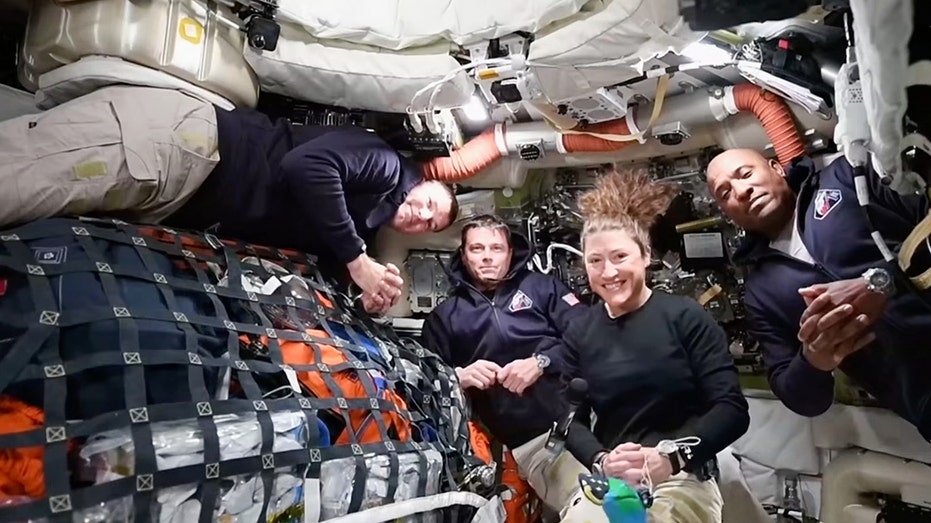
Even on a Historic Moon Mission, Basic Human Needs Matter
More than halfway to the moon, the four astronauts aboard NASA’s Artemis II mission are confronting a down-to-earth problem: the spacecraft’s toilet is acting up—again.
The Orion capsule, which launched Wednesday from Kennedy Space Center, is carrying its crew toward a pivotal lunar orbit scheduled for Monday. But for the second time since liftoff, the onboard waste system has malfunctioned, reminding us that space exploration is as much about solving everyday human challenges as it is about grand technological feats.
During a Saturday press briefing, Artemis II Flight Director Judd Frieling explained that overnight efforts to vent the wastewater tank ran into trouble. Engineers believe an ice blockage may be interfering with the system. As a precaution, mission control instructed astronauts to rely on collapsible backup urine collection devices—a contingency plan designed specifically for situations like this.
The issue first surfaced on the mission’s opening day and has lingered since. While the toilet remains functional for solid waste, the hiccups have forced the crew and ground teams to lean on built-in redundancies. NASA officials emphasize that this is exactly why test flights exist.
Testing Systems to Protect People
“This is a test flight,” said Debbie Korth, deputy manager of NASA’s Orion program. “We’re learning how all these systems work together.” She confirmed that the toilet remains operational and that multiple safeguards are in place to ensure the crew’s well-being.
Space travel demands extraordinary technical precision, but it also demands a deep understanding of basic human needs. Bathrooms, as Korth pointed out, are something every person can relate to. In microgravity, however, those “ordinary” systems become engineering puzzles—ones that must be solved to protect astronaut health and dignity.
John Honeycutt, chair of the mission management team, acknowledged public fascination with the issue. After all, everyone understands how essential sanitation is. In the vacuum of space, managing waste safely and hygienically is far more complex than it is on Earth. Honeycutt said he wants the system operating at its best for the crew’s sake, noting that life in the Orion capsule is already akin to “camping in space.” Limited facilities only make that experience tougher.
The astronauts have also reported an unusual odor, described as resembling a burning heater, coming from the bathroom area located in the floor of the capsule. Astronaut Christina Koch raised the issue with mission control to ensure engineers were tracking it carefully. Transparency and quick reporting are critical safeguards when human lives depend on technology millions of miles from home.
A Reminder of Public Investment in Shared Progress
While the malfunction may invite lighthearted headlines, it underscores a more serious point: space exploration is sustained by public investment and the labor of thousands of skilled workers—engineers, technicians, scientists, and the astronauts themselves. Missions like Artemis II represent a commitment to collective progress, fueled by democratic funding and collaborative expertise.
Test flights are designed to uncover weaknesses before future missions carry even greater stakes. Identifying and resolving these issues now strengthens the safety of everyone who will follow, reinforcing NASA’s long-term goal of expanding human exploration while protecting the people who make it possible.
- The Orion toilet has experienced venting issues, likely due to an ice blockage.
- Astronauts are using backup urine collection devices as a precaution.
- The toilet remains usable for solid waste.
- NASA continues to monitor reports of odor in the bathroom area.
- The crew is scheduled to orbit the moon before returning to Earth.
Artemis II is not only a technological milestone—it is a human one. Ensuring that astronauts have safe, dignified living conditions in space is not a trivial concern; it’s central to ethical exploration and scientific advancement. As Orion moves closer to the moon, the mission stands as a testament to both our ambition and our responsibility to care for those who carry it forward.
In the vast silence of space, even the smallest systems reflect our shared responsibility to protect human life and learn from every challenge.